Before it was a game reserve, this land spent almost a century as pineapple, cattle, and sisal farms: overgrazed, fenced into small camps, and empty of the wildlife that once lived there. In 1991, &Beyond founded Phinda Private Game Reserve on 13,076 hectares of it, the first private reserve in KwaZulu-Natal, built on a simple bet: that tourism could fund putting the land back the way it was, and support the communities around it at the same time. Old cattle fences came down, farm roads were left to grow over, and the slow work of letting bushveld reclaim former farmland began, decades before "rewilding" was a word anyone used for it.
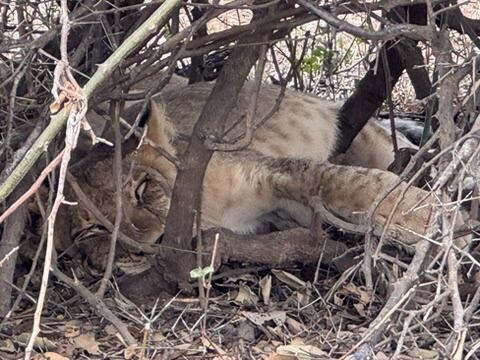
Land left alone long enough grows thick again, and thick bush hides things like this.
Bringing the wildlife back
The reintroductions that followed are still referenced as case studies. Thirteen lions from different prides were carefully mixed in 1992 and 1993, creating one of South Africa's most genetically diverse lion populations, diverse enough that it has since helped restock reserves elsewhere in Africa and reverse a 15-year local extinction of lions in Rwanda. Twelve Namibian cheetah followed, timed to settle before the lions arrived, in what became the first successful reintroduction of both species into the same area together. Phinda was also the first private reserve to reintroduce elephant, starting with 37 orphaned youngsters in 1991. And in 2004, the reserve was chosen for the WWF/Ezemvelo KZN Wildlife Black Rhino Range Expansion Project, receiving 15 black rhino. The first calf was born there within the year.
Lion
13 lions, mixed from different prides, 1992–93
Cheetah
12 Namibian cheetah, first successful co-reintroduction with lion
Elephant
First private reserve to reintroduce elephant, from 1991
Rhino
21 white rhino moved in a single day; 15 black rhino added in 2004
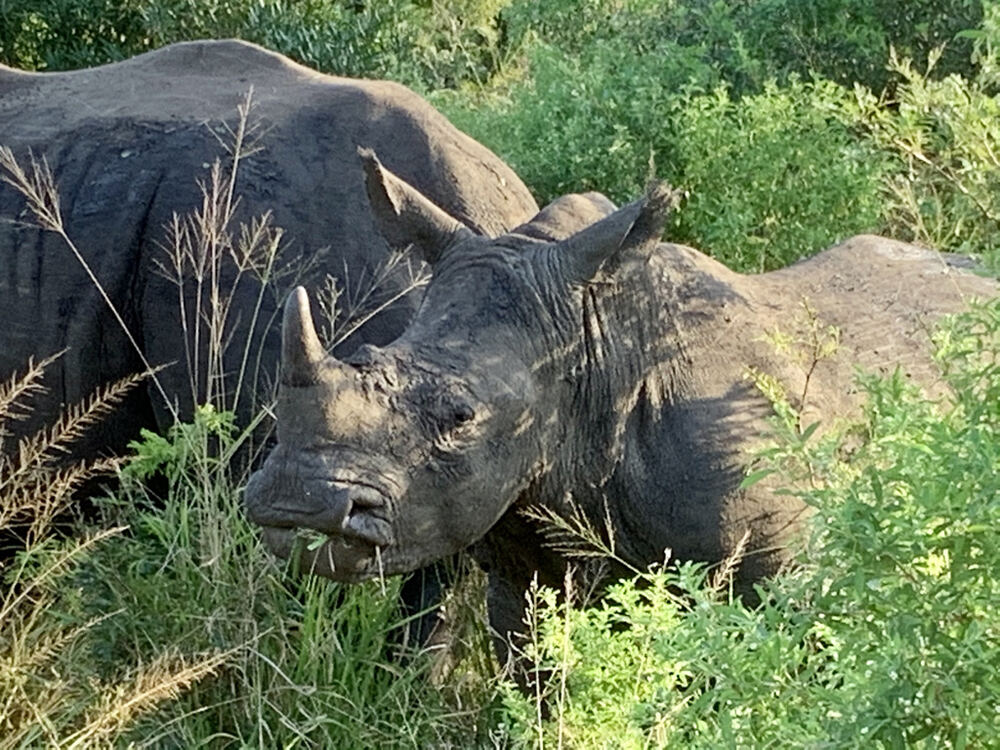
Grazing on land that was cattle farm within living memory.
Bringing the land back
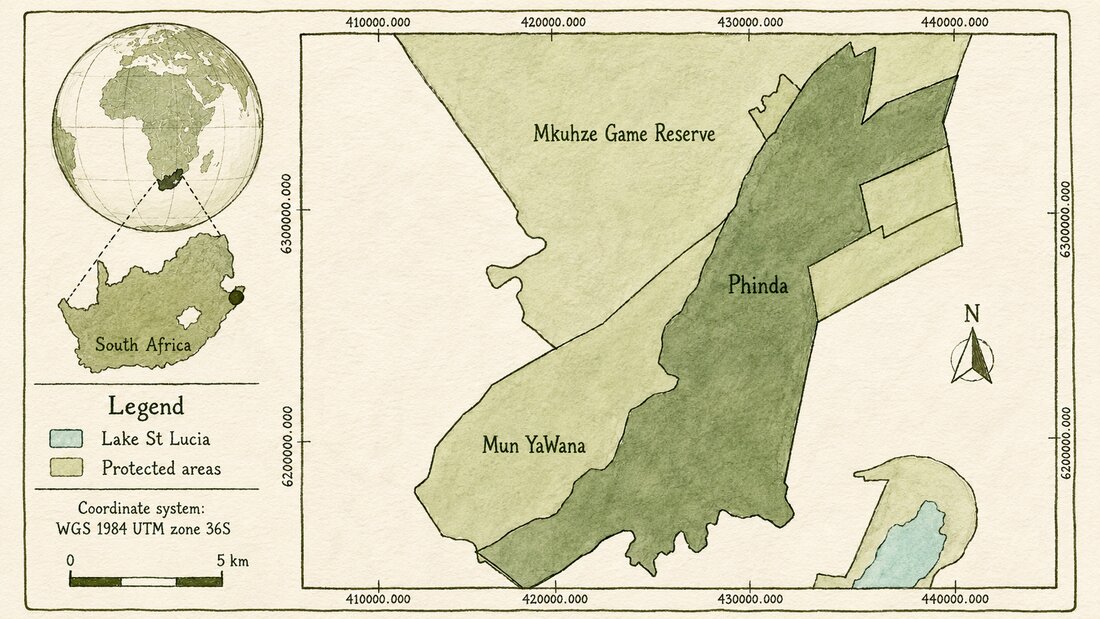
Munyawana and Phinda, shown here relative to Mkhuze Game Reserve and Lake St Lucia. Illustrative only, not a surveyed boundary map.
In 2007, &Beyond returned 9,032 hectares of Phinda to its ancestral owners: the Makhasa and Mnqobokazi communities. As the new legal owners, they could have converted it to farming or development. Instead, both communities chose to keep it wild, asking that it continue to be used for conservation, not as beneficiaries of someone else's project, but as landowners actively deciding what happened to their own land next.
That land, combined with neighbouring private and community-owned properties, became the Munywana Conservancy: almost 30,000 hectares held jointly by the Makhasa Community Trust, &Beyond Phinda, and Zuka Private Game Reserve, a genuine partnership in ownership and governance, not just a lease arrangement. It was officially gazetted as a protected reserve in 2019.
The animals were here long before us; we should let them come back.Nkosi Simon Gumede, leader of the Makhasa Tribal Authority and Mduku Community
What the return actually paid for
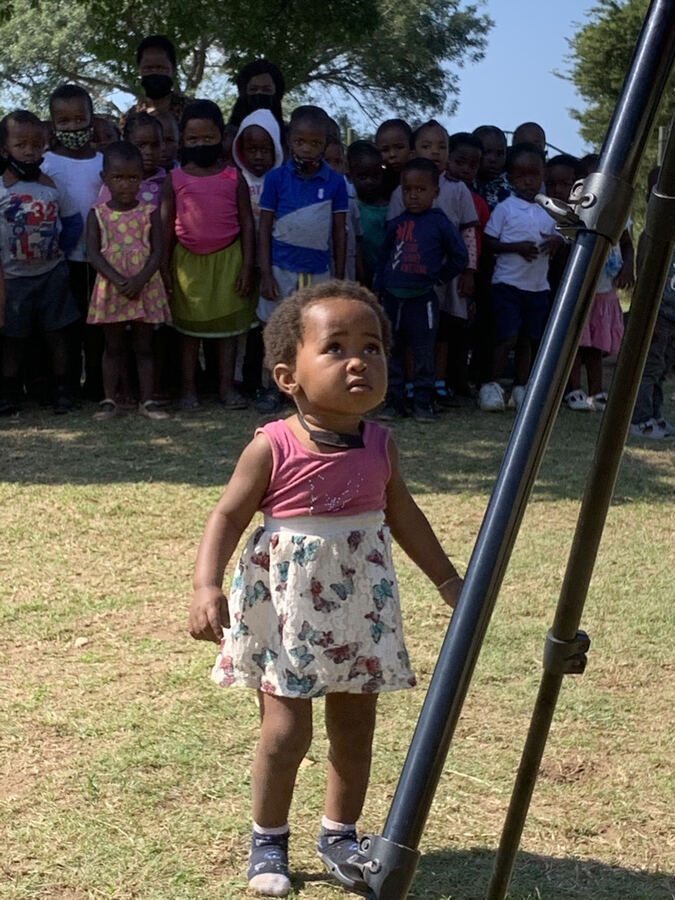
The schools and clinic below exist for children like these.
The revenue-sharing model behind all of this has a name: Wild Impact, &Beyond's non-profit community development partner, established in 1992 (first as the Rural Investment Fund, then Africa Foundation, rebranded again in 2024). It's responsible for some of the most concrete community infrastructure in the area: a primary school in Mnqobokazi, a crèche built with the Operation Jumpstart non-profit, and the Mduku Clinic, which started in 1994 as a single building replacing a fortnightly mobile clinic that was the community's only healthcare access. Mduku Clinic is now a 24-hour primary healthcare facility serving more than 55,000 people a year.
→ Read: Stitching a coastline of reserves back together ← Back to Conservation