Hluhluwe-iMfolozi is the best place in the world to see rhino in the wild. It's the reserve that rebuilt the global white rhino population from a few dozen survivors, and it still holds one of the highest concentrations of rhino left anywhere in Africa. That history is exactly what makes this hard to write about: the same ground that saved the species is still, today, on the front line of the threat that could undo it.
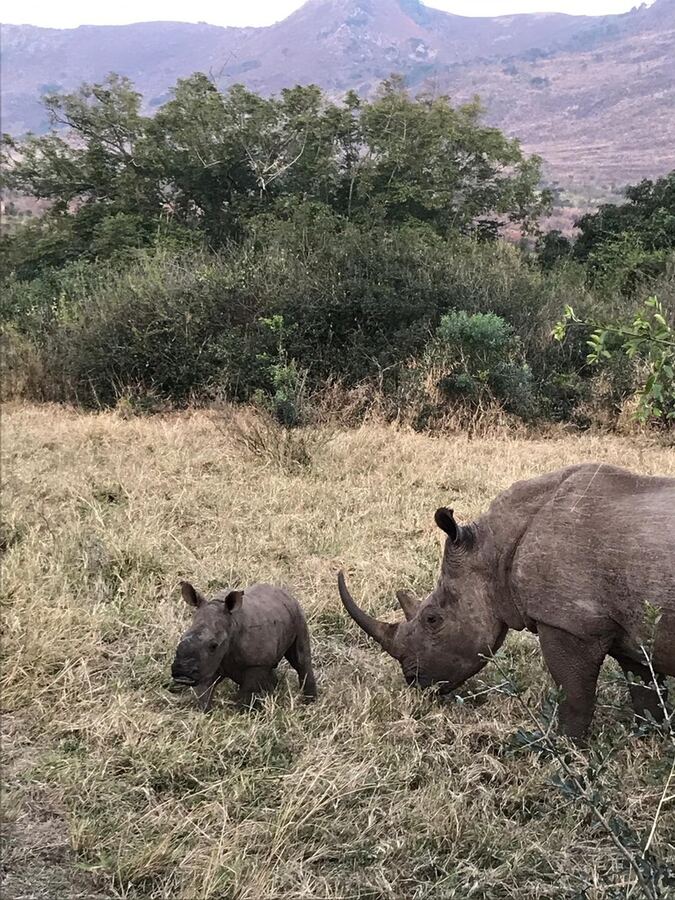
A cow and calf in Hluhluwe-iMfolozi, grazing much as they would have when Operation Rhino began.
Why rhinos, still
Rhino horn is keratin, the same material as human fingernails and hair. It has no proven medicinal effect. That hasn't stopped demand for it, driven mainly by traditional medicine belief and, increasingly, by its use as a status symbol in parts of Asia. That demand, filtered through organised trafficking networks, is what puts pressure on reserves like this one, not any single local cause.
Dehorning, and why it isn't a simple answer
One widely used response is dehorning: a vet sedates the animal and removes the horn, a procedure that doesn't harm the rhino any more than clipping a nail does, since the horn itself has no nerve endings near the cut point. The logic is straightforward: a hornless rhino is a much less attractive target.
The case for it
Reserves that have dehorned their populations have reported meaningful drops in poaching incidents, and it removes the incentive without needing to catch every poacher.
The open questions
Horn regrows, so the procedure needs repeating every year or two, at real cost and repeated sedation risk. Researchers also still debate what role horns play in calf defence, mate competition, and social behaviour, and whether removing them changes that.
It's a genuine trade-off, not a solved problem, and any page that presents it as one isn't telling the whole story.
→ Read: Built for a crisis that starts near here ← Back to Conservation